
Best Areas to Visit in Java: A Practical Region Guide
The best area to visit in Java depends less on the prettiest volcano photo and more on the kind of route you are actually trying to build.
Java is long, busy, volcanic and much more varied than it looks. This guide breaks down West, Central and East Java so you can choose the right bases, understand the train route and plan your trip before you book anything.
Java at a glance
Java is not the easiest island in Indonesia to summarise.
It is home to Jakarta, one of the largest urban areas on earth, but also to misty tea highlands, active volcanoes, ancient temples, royal cities, national parks, black-sand coasts and small towns where arriving by train still feels like part of the experience.
Most travellers do not come to Java for one simple thing. They arrive because Java sits between other places. Bali to the east. Sumatra to the west. Flights through Jakarta. Temples near Yogyakarta. Bromo and Ijen on the way to the ferry. But if you treat Java as just a transit island, you miss the point.
Java works best when you understand it as a journey. Its major cities, volcanoes, temples, highlands and ferry crossings connect naturally into an east-west route, and unlike many parts of Indonesia, you can cover much of that route by train.
That said, Java is not one uniform line across the map. The island is easiest to understand in three broad regions: West Java, Central Java and East Java. Each has a different feel, different landscapes, different transport logic and a different reason to stay.
This guide breaks Java down by region and by practical travel zone, so you can work out where to go, how long to spend, and whether you are building a culture-heavy trip, a volcano-heavy trip, or a full overland route from Bali to Sumatra.
Need a quick answer?
If it is your first time in Java and you want one base that makes sense, choose Yogyakarta. It gives you food, culture, temples, good accommodation options, strong tourism infrastructure and day trips to Borobudur, Prambanan and Mount Merapi.
If you want the classic Java route, travel from Jakarta to Bandung, then Yogyakarta, then Malang or Bromo, then Banyuwangi for Ijen and the ferry to Bali.
If you only care about volcanoes, make your route around Bandung, Dieng, Bromo and Ijen. If you mostly care about culture, build around Yogyakarta, Borobudur, Prambanan, Solo, Semarang and Cirebon.
The Broad Picture: West, Central and East Java
Before getting into the specific zones, it helps to understand Java’s basic character by region.

West Java
West Java is the western gateway. It includes Jakarta, Bogor, Bandung, the Sunda highlands, tea plantations, accessible volcanoes, south-coast beaches and the ferry crossing to Sumatra.
For many travellers, West Java is the region they move through on the way to somewhere else. But if you like highlands, crater lakes, old coastal cities and less obvious beach towns, it is worth slowing down for. This is where you find Jakarta, the cooler hills around Bandung, volcanic landscapes like Kawah Putih, the old north-coast city of Cirebon, and the beach town of Pangandaran.
Central Java
Central Java is where Java’s cultural layers are easiest to see. This is where you find Yogyakarta, Borobudur, Prambanan, Solo, Semarang, Dieng Plateau, and some of the island’s most important temples, royal cities and volcanic highlands.
If you only have time for one part of Java and you want to feel depth rather than just busy, then Central Java is probably the right answer. You still need to allow proper travel time, because Java is large and traffic can be slow — but Central Java gives a great density of temples, palaces, old cities, volcanic highlands and train-linked towns that can form a route for any type of trip you are after.
East Java
East Java is the best region to focus on if volcanoes are high on your list. Bromo is the famous sunrise-and-caldera landscape, while Ijen is known for its crater lake, sulphur mining and blue-fire tours. Malang makes a cooler, softer city base than Surabaya, while Banyuwangi is the practical base for Ijen and the final stop before the ferry from Ketapang to Gilimanuk in Bali.
If you have more time, East Java also has some of the island’s strongest national park options, including Baluran National Park, Alas Purwo National Park and Meru Betiri National Park. These are less obvious than Bromo and Ijen, but they are worth looking at if you want wildlife, remote beaches, forest, surf or a slower route through the far east.
The other way to read Java
West, Central and East Java are the easiest way to plan your route, but Java also changes from north to south.
The north coast is generally flatter, busier and more connected. This is the old trading edge of the island, where you find port cities, colonial roads, railway corridors and major transport routes. Places like Jakarta, Cirebon, Semarang and Surabaya sit inside this north-coast story.
The middle of the island is where Java rises into its volcanic spine. This is the world of highlands, crater lakes, fertile basins, temple plains, tea plantations and active mountains. Bandung, Dieng, Yogyakarta, Solo, Malang, Bromo and Ijen all sit within this broader inland pattern.
The south is generally rougher, quieter and less straightforward to travel through. It has wilder coastlines, surf beaches, caves, limestone country, forested hills and roads that do not always connect as cleanly as the northern corridor.
So when planning Java, think in two directions at once. West to east gives you the journey. North to south gives you the texture.
West Java: Jakarta, Bandung, highlands and the Sumatra gateway
West Java is often treated as the opening act, especially if you fly into Jakarta and immediately start thinking about Yogyakarta or Bali. But this part of the island has a lot more going on than airport logistics and traffic-induced despair.
This is the Sundanese part of Java, with its own food, language, landscapes and cultural identity. It is also where the island shifts quickly from capital-city chaos to botanical gardens, mountain roads, tea estates, volcanic craters and the south coast.
If you have limited time, West Java can be hard to prioritise. If you have a slower trip, it becomes a much more interesting question: do you want to rush out of Jakarta, or use West Java as your first proper introduction to the island?
Jakarta
Jakarta is not the softest introduction to Java. It is not a beach town, a temple base, or an obvious holiday destination; it is enormous, traffic-heavy, hot, busy and often exhausting. But it is Indonesia’s capital, and that alone makes it worth understanding. This is where political power, business, infrastructure and growth are concentrated, and where you get a much clearer sense of the country Indonesia is becoming: enormous, ambitious and... complicated.
The best traveller-facing parts of Jakarta are the ones that give the city some historical shape. Kota Tua, the old Batavia area, is the obvious starting point for colonial history. Sunda Kelapa Harbour gives you the older maritime layer. The National Museum of Indonesia is useful if you want context before travelling further across Java.
Who it suits: Travellers flying in or out, people interested in museums, food, colonial history, urban Indonesia and anyone who wants to witness the rise of an economic powerhouse first hand.

Bogor and the Puncak highlands
Bogor sits south of Jakarta and is one of the easiest ways to soften your arrival into Java. It is cooler, greener and far less overwhelming than the capital, though still very much part of wider Jakarta.
The main reason to visit is the Bogor Botanical Gardens, one of the great green spaces of Java. Bogor also works as a stepping stone towards the Puncak highlands, tea country and the volcanic landscapes around Gunung Gede Pangrango National Park.
Look, I would not necessarily send someone here if they only have five days in Java, but if you are landing in Jakarta and need a gentler first stop, Bogor makes a lot of sense.
Who it suits: Travellers who want a gentler alternative to Jakarta, garden lovers, families, and anyone heading towards the West Java highlands.

Bandung and the West Java highlands
Bandung is the main highland city of West Java and a very useful base for the region. It is still a large city with traffic and busy weekends, but it feels more manageable than the capital and more connected to the landscapes around it. Stay here if you want a practical base for West Java’s volcanic highlands, without giving up easy food, accommodation and transport.
The landscapes around Bandung are the real reason to come. North of the city, Tangkuban Perahu is one of the more accessible volcano experiences in Java. South, Kawah Putih is one of the easiest places to see West Java’s volcanic side. The crater lake is pale and strange, a sulphur smell is always there, and the whole place feels very different to the green tea country nearby.

Around Ciwidey we find tea estates, strawberry farms, crater lakes and cooler mountain roads. It is still on the West Java tourist trail, but the landscape feels rural and elevated rather than urban.
Who it suits: Travellers who like highlands, tea plantations, volcanoes, cooler weather, food and a more comfortable introduction to inland Java.
Jakarta to Bandung is not as simple as it looks
Jakarta and Bandung look close enough on a map, and with the high-speed rail option between the two cities it should be easy... But the stations, transfers and onward transport need to be considered. Depending on where you are staying in Jakarta and Bandung, getting to and from the right stations may take long enough that a slower train becomes the easier option.
Cirebon
Cirebon sits on Java’s north coast between Jakarta and Central Java, and makes most sense if you are following the northern rail or road corridor east. It is often skipped, but it is one of the better places to see Java’s old trading-coast culture, where Javanese, Sundanese, Islamic and Chinese influences shaped the city. The main stop is Kraton Kasepuhan, which gives Cirebon a very different feel from Bandung’s highland scenery or Yogyakarta’s temple-and-palace circuit.
Who it suits: Slow travellers, culture-focused travellers and anyone who likes cities that are not built entirely around tourism.

Pangandaran and the south coast
Pangandaran is one of West Java’s better-known south-coast beach towns, though it still feels much more like a local holiday spot than an international resort area.
The main town gives you the easiest base, while nearby places like Green Canyon / Cukang Taneuh and Madasari Beach make the area much more interesting than a simple beach stop. Madasari is especially worth knowing about if you want a wilder stretch of coast, with sea stacks, open views and a much less built-up feeling than Pangandaran itself.
If you have time constraints and are trying to get across Java quickly, Pangandaran is probably not the right choice. If you have some time, and you want the island to feel less like a chain of cities and volcano tours, it becomes much more appealing.
Who it suits: Travellers who want a beach stop, surfers, families, and anyone wanting a break from cities and volcanoes.

Ujung Kulon
Ujung Kulon National Park sits at Java’s far western end and is a protected area for the same reason most people visit: this is where you will find the critically endangered Javan rhinoceros... just don't expect to see one wandering across your path. Tours here are your best bet.
Do know that this is not a casual add-on if you are rushing across Java. It takes time, planning and transport, but it is one of the strongest nature options in West Java.
Who it suits: Wildlife-focused travellers, national park people, slow travellers, and anyone willing to make the effort for a special little pocket on the island.
Central Java: temples, royal cities, volcanoes and the easiest first base
Central Java is probably the easiest part of Java to recommend if it is your first time on the island. Not because it is small or effortless (because it absolutely is not), but because the things most people come to Java hoping to see are clustered here.
This is where you find Yogyakarta, Borobudur, Prambanan, Solo, Semarang and Dieng Plateau. Temples, palaces, volcanoes, old cities, highlands and train connections all sit close enough together that the region feels manageable to plan.
What makes Central Java so useful is that it gives you the clearest version of Java without needing to cross the whole island. You can base yourself in Yogyakarta or Solo, take a few deliberate day trips, and come away with a real sense of perspective. You can really feel that the temples, palaces and volcanoes are all tied to a bigger story of kingdoms rising and falling, religions breathing and morphing, and how Java’s volcanic landscape shaped the places people lived, ruled and worshipped.
This is where Java’s big decision comes in: are you trying to move quickly through the famous route, or are you willing to slow down and let Central Java and its incredible history wash over you?
Yogyakarta
Yogyakarta is the easiest and most common place to recommend. It has strong tourism infrastructure; good food; huge cultural depth, as well as access to major temples and that 'grabby' feeling of just wanting to stay longer to feel the atmosphere.
The city itself is part of the itinerary. The Kraton Yogyakarta is the royal palace and the centre of the city’s court identity. Taman Sari, the former royal garden and bathing complex, adds another layer of palace life. Malioboro Street is busy and touristy.
Yogyakarta is also the most practical base for visiting Borobudur, Prambanan and Merapi. For a first trip to Java, this is probably the safest place to build around.
Who it suits: First-time Java travellers, culture-focused trips, temple visits, slow travellers, food lovers and anyone who wants one base that gives a lot back.
Why are there Hindu and Buddhist temples in Java?
Java is now mostly Muslim, but earlier kingdoms were strongly shaped by Hindu and Buddhist ideas. Central Java became a major Hindu-Buddhist centre between roughly the 8th and 10th centuries, leaving monuments such as Borobudur and Prambanan.
Borobudur and Magelang
Borobudur is Java’s major Buddhist monument and one of the essential cultural sites in all of Indonesia. It sits near Magelang, northwest of Yogyakarta, and is often visited as a sunrise or morning trip. It deserves more than a quick “big temple” stop. It was built during a period when Central Java was one of the most important Hindu-Buddhist centres in the region.
If you have the time, it is worth adding nearby Mendut Temple and Pawon Temple rather than seeing Borobudur in isolation. They are much smaller, but they will help you understand that Borobudur was part of a wider sacred area.
Most travellers visit Borobudur from Yogyakarta, which is perfectly sensible. Staying around Magelang can be worthwhile if you want a slower temple and countryside experience rather than a city base.

Who it suits: First-time Java travellers, temple lovers, photographers, history-minded travellers and anyone trying to understand Java beyond the modern island.
Prambanan and the temple plain
Prambanan is Java’s great Hindu temple complex. Where Borobudur gives you Java’s Buddhist monumentality, Prambanan gives you tall, sharp, Hindu temple architecture dedicated to Shiva.
The wider area is full of smaller but worthwhile temple sites. Candi Sewu is a large Buddhist temple complex. Plaosan Temple is another good stop nearby. Ratu Boko sits on a hill above the plain and is often visited for sunset.
Who it suits: Temple lovers, photographers, first-time visitors, history-minded travellers and anyone who wants a fuller temple day than just Prambanan alone.

Mount Merapi
Mount Merapi is the major volcano north of Yogyakarta, and one of the most active in Java. Most travellers experience it through jeep tours, viewpoints and villages on the lower slopes rather than by climbing the mountain itself. Access and conditions can change, so this is one of those places where it is worth checking current local advice rather than relying on blog posts.
It is worth including because outside of the scenic day trip, it really gives you a sense of what it means to live beside an active volcano that has shaped the surrounding villages through eruptions, evacuations and rebuilding.
Who it suits: Volcano-curious travellers, photographers, Yogyakarta visitors, people interested in natural hazards and anyone who wants to understand how closely Java’s cities and volcanoes sit together.
Solo
Solo, also known as Surakarta, is often skipped in favour of Yogyakarta, which is understandable but a shame. It is one of Java’s best places for court culture, batik, markets and a less tourist-heavy version of Central Java.
The major palace sites are Keraton Surakarta Hadiningrat and Pura Mangkunegaran. Solo also has strong batik traditions, with places like Kampung Batik Laweyan and Kampung Batik Kauman.
Solo is not as simple as Yogyakarta, so it is better for people who want to go a little deeper into Javanese culture without feeling like they are on the same circuit as everyone else.
Who it suits: Culture-focused travellers, repeat visitors, batik lovers, slower itineraries and anyone who wants a quieter counterpoint to Yogyakarta.
Dieng Plateau and Wonosobo
Dieng Plateau is one of Central Java’s more unusual highland areas. It sits high above the temple plains around Yogyakarta, where cold mornings, vegetable farms, old Hindu temples, crater lakes and sulphur vents all share the same exposed volcanic plateau.
The appeal is in how ordinary and strange it feels at the same time. People are farming potatoes and vegetables in a landscape that still steams, smells of sulphur and holds some of Java’s oldest temple remains.
The Arjuna Temple Complex is the main temple area, while Sikidang Crater gives you steaming volcanic ground and sulphur smells without a major hike. Telaga Warna, the coloured lake, is another common stop.
Most travellers reach Dieng via Wonosobo. Dieng is not glossy. It is cold by Indonesian standards, the roads can be slow and accommodation is generally simple. But if you like highlands and intriguing volcanic places, it could become your most rewarding stop in Java.
Who it suits: Volcano-curious travellers, photographers, slow travellers, highland lovers and people who like their cultural sites with cold air and sulphur fumes (if you exist?).

Semarang
Semarang is Central Java’s major north-coast city, and it feels very different from Yogyakarta. You won't find temple plains and royal courts here, but a port city built up around trade, Dutch colonial administration and the railway system.
Kota Lama Semarang is the main old-town area, with Dutch-era buildings, cafes and restored streets. Lawang Sewu is the city’s famous former railway company building, and Sam Poo Kong Temple is worth seeing, especially if you want to see more of the Chinese-Indonesian side of Central Java.
Semarang makes sense if you are travelling the north coast and want to break up the journey, or are interested in Java’s trade and colonial history rather than only temples and volcanoes.
Who it suits: History-minded travellers, north-coast itineraries, train travellers, old-town wanderers and people wanting a more urban Central Java stop.
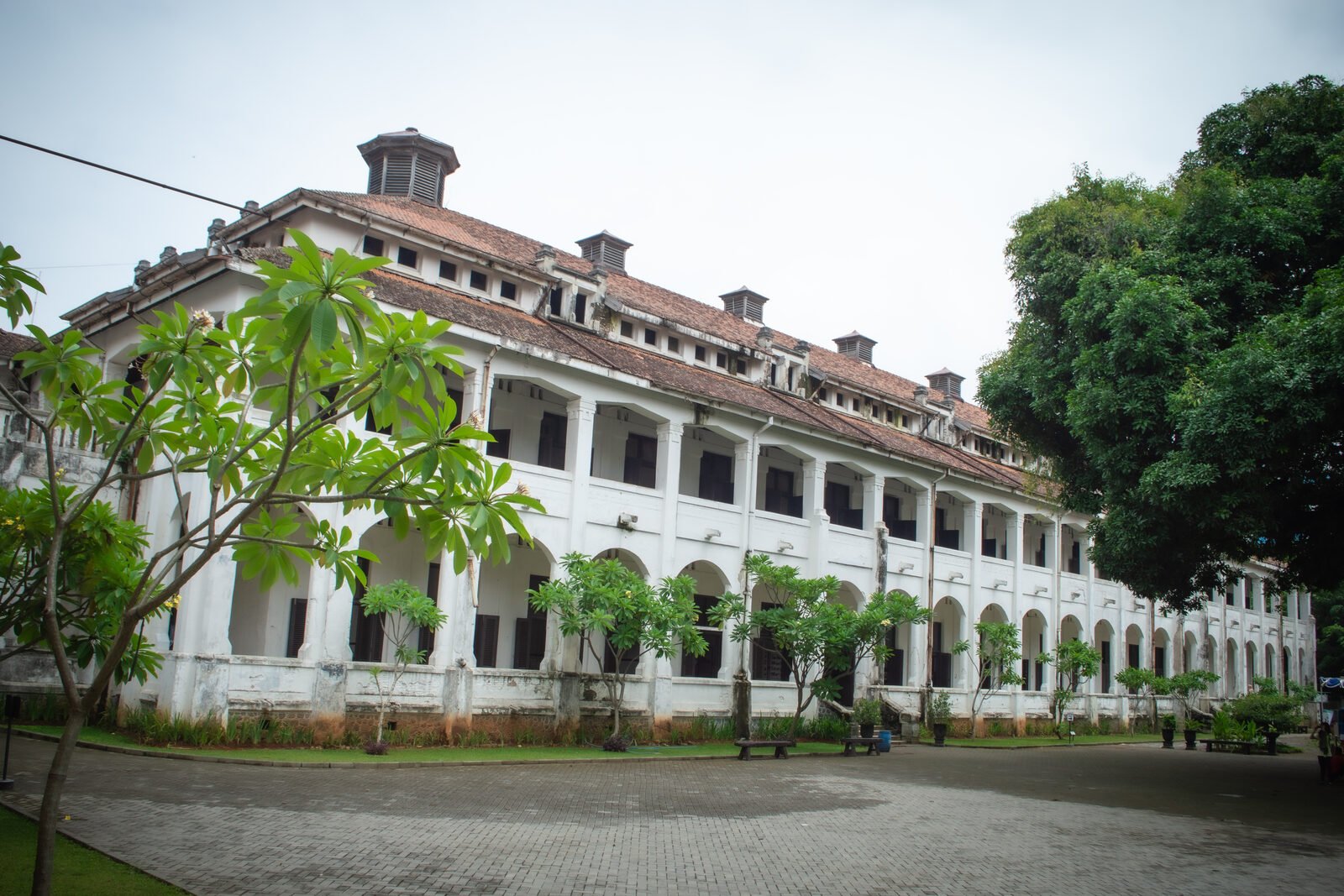
Karimunjawa
Karimunjawa is a small island sitting in the Java Sea north of Jepara. It is a national marine park, with plenty of small islands with white sand beaches, coral reefs, mangroves and perfectly clear water.
The main reason to come is under the water. It is one of the better places in Java for snorkelling and diving, especially if you want that clear-water island experience without leaving the Java route entirely. While remote, it is not completely untouched, so the reefs are under pressure from tourism, fishing and climate stress.
Access is the main thing to understand before you add it to your itinerary. Fast boats via Jepara take around two hours and the slower ferry takes closer to five. There are sometimes services from Semarang too, but these are less frequent and can change, so Jepara is usually the more practical route to plan around.
If you have the time, then Karimunjawa is one of the nicest ways to break up a Java route with a few days of beaches, snorkelling and that wonderful experience of "island time".
Who it suits: Beach lovers, snorkellers, divers, slower itineraries and anyone wanting an island break without flying off to Bali or Lombok.

East Java: Surabaya, Malang, Bromo, Ijen and the Bali ferry
East Java is where the volcanoes start to take over the trip. This is the region of Bromo’s ash plains, Ijen’s crater lake, Malang’s cooler uplands, Surabaya’s old port-city history and the final road east towards the ferry to Bali.
Be careful of your sleep patterns here, or you'll end up in a sleep-deprived haze. Bromo sunrise, Ijen blue fire, long drives, early starts, ferry crossings, instant coffees at strange hours. It can be wonderful, but it is worth planning carefully, or taking a slow travel mindset if time allows, unless you want to spend most of this region feeling tired, rushed and in transit.
For a slower trip, East Java has more to offer than the standard Bromo-Ijen run. Malang is the easiest place to settle in for a few days, especially if you want cooler air and a quiet base before or after Bromo. Surabaya is bigger and busier, with port-city history and usefully strong transport links. Further east, Banyuwangi works well for Ijen and the Bali ferry, while Baluran, Alas Purwo and Meru Betiri give you national parks, forest, beaches and wildlife instead of another early-morning volcano tour.
Surabaya
Surabaya is East Java’s main city and Indonesia’s second-largest city by population. It is busy, industrial and not always obvious why you might stay here. But there is real port-city history, strong transport links, and it is an important place in Indonesia’s progressing story.
If you do stay, focus on the parts of the city that give it some weight. Surabaya Old Town / Jembatan Merah gives you the old port and colonial-era streets, House of Sampoerna is a nice heritage stop, and Hotel Majapahit is tied to the city’s most important independence-era moments.
Surabaya is also a logical staging point for Bromo, Madura, Malang or onward travel across East Java. If you want ease and connections, it is useful. If you want vibes and a less chaotic arrival then Malang will probably suit you better.
Who it suits: Transport-focused travellers, history-minded travellers, city people, and anyone who prefers a major urban base.
Madura
Madura sits off the northeast coast of Java and is connected to Surabaya by the Suramadu Bridge. It is administratively part of East Java, but it really does have a different feel to it.
Honestly, it is not a first-time must-do stop, but it can help show you that the eastern side of the island is not only about volcanoes. If you are travelling slowly, Madura adds a different cultural and coastal layer to the region.
Who it suits: Slow travellers, repeat visitors, people based in Surabaya and anyone interested in places that sit outside the obvious Java route.
Malang and Batu
Malang is a very comfortable base. It is cooler than Surabaya, somehow feels 'gentle' (at least in comparison), and works well for reaching Bromo and nearby highland areas.
The city has colonial-era streets, good food and a more relaxed pace than Surabaya, so you might like to stop here and pause rather than pass straight through. Kampung Warna-Warni Jodipan is the most obvious stop in town, while nearby Batu sits higher again and will give you a cool mountain escape.
If you want to do Bromo but do not want to base yourself somewhere purely functional, Malang is your best bet.
Who it suits: Bromo visitors, travellers who prefer cooler cities, photographers, food lovers and anyone who wants East Java with a softer landing.

Probolinggo, Cemoro Lawang and Bromo
Mount Bromo is the East Java volcano most of you will have seen photos of without knowing its name. The view is extraordinary... but also eerie. A flat black plain covered in volcanic ash; a smoking crater rising from it; and the caldera walls enclosing the whole thing with the Tengger villages sitting around the rim. It truly doesn't feel like our own little planet earth, but a view of a different world.
Also, sorry to disappoint you — but it is one of Java’s busiest natural attractions, so it is worth going in with the right expectations rather than imagining a quiet sunrise alone on the mountain.
The usual access points are Probolinggo, Cemoro Lawang, Malang or Surabaya, depending on your route and how much 'let's-make-life-easy' you want to pay for. Most people visit for the sunrise from viewpoints around Mount Penanjakan, then descend towards the Sea of Sand and the crater area.

The landscape is spectacular, but the experience can feel rather... packaged and overwhelming (and so, underwhelming at the same time) if you only do the standard tour and leave immediately after breakfast with everyone else. If you have time, really consider staying in the highlands rather than treating Bromo as a hit-and-run sunrise stop.
Who it suits: First-time Java travellers, photographers, volcano lovers, overland travellers and anyone doing the classic Java-to-Bali route.
Bromo and Ijen are not the same kind of stop
Bromo is usually about the view. You wake early, go to a sunrise viewpoint, cross the Sea of Sand and walk up to the crater rim. It is dramatic, photogenic and relatively straightforward if you are comfortable with early starts and crowds.
Ijen is more physically involved. The walk is steeper, the start is often earlier (2am!), and the experience can involve sulphur fumes and head torches. They are often sold together as one East Java volcano package, but they do not feel the same.
Semeru
Semeru is Java’s highest mountain, rising to 3,676 metres behind the Bromo landscape inside Bromo Tengger Semeru National Park. A lot of people skip visiting Semeru, but you will often see it in the distance when standing at the Bromo viewpoints.
Its active status became very apparent in November 2025, when Semeru erupted suddenly and more than 170 people had to be rescued and nearby villages were also evacuated. So yes, this is still absolutely worth visiting, but the experience for most travellers might be the wider national park area and not Semeru’s summit.
Base yourself around the Bromo side of the park if you want the classic views, the Sea of Sand, the crater walk and the Tengger highland villages. If conditions allow and you want something quieter, areas around Ranu Pani, Ranu Regulo and Ranu Kumbolo give you a colder, greener and more hiking-focused side of the park, but only plan around them after checking current access.
Who it suits: Experienced hikers, volcano-focused travellers and people willing to plan around safety restrictions rather than forcing a fixed itinerary.
Banyuwangi and Ijen
Ijen is famous for its crater lake, sulphur mining and blue-fire tours. It is one of the most distinctive volcanic experiences around the globe. Though, like all the rest of these volcanoes it also involves early starts (not my thing), steep walking (my thing), fumes (no one's thing) and a tourism scene directed at one single thing (somehow everyone's thing).
Banyuwangi is the main base and the natural final stop before crossing to (or arriving from) Bali. The Ketapang Ferry Port connects East Java with Gilimanuk in West Bali.

Who it suits: Volcano-focused travellers, overland travellers to Bali, hikers, photographers and people who do not mind a very early morning.
Baluran National Park
Baluran National Park is best known for its dry savanna landscape, very contrasting to most of Java’s volcanic highland scenes. The main area people come to see is Bekol Savanna for its open grasslands, acacia trees and the shape of Mount Baluran in the background give the park its “Little Africa of Java” nickname.
Wildlife sightings are never guaranteed, but this is one of the more likely places. So, take a breath, slow down and look for deer, monkeys, buffalo and birds. You can also continue through to Bama Beach for mangroves and a coastal forest.
Who it suits: Wildlife-curious travellers, photographers, overland travellers with extra time, and anyone who wants to break up the volcano-heavy East Java route.

Alas Purwo and Meru Betiri
Alas Purwo National Park sits on the Blambangan Peninsula at the far southeastern tip of Java, where it all of a sudden starts feeling remote and exposed. The park is large and spread out, with forest roads leading through lowland jungle towards surf beaches and reef-lined coast.
The best-known area is Plengkung Beach / G-Land, a popular surf break that draws serious surfers. For everyone else the appeal is the mix of forest roads, quiet beaches, caves, mangroves and wildlife areas. This is a great place to get off the volcano route and see something less packaged.
Meru Betiri National Park requires a similar amount of effort, but the focus is different. People come here for Sukamade Beach — where turtle conservation is the big draw and access usually involves rough roads through forest and plantation country.
These National Parks are not a quick detour from the Bromo-Ijen route. Roads are slow, accommodation is simple and you need more patience than you would for the areas with tourist infrastructure. But if you have the time, these far-eastern parks give you a completely different version of Java: forest, remote beaches, wildlife areas and a much quieter experience.
Who it suits: Surfers, wildlife travellers, conservation-minded travellers, slow East Java itineraries and anyone who does not need everything to be easy.
How to travel across Java by train
For slow travellers, the train is one of the best things about Java. Indonesia is not always an easy country to move across overland, but Java is the exception. The railway gives the island a practical spine, linking many of the major cities and bases you will want to stay at.
A simple Java train route
The train is not a magical solution — you won't be going from platform to the crater rim of Bromo then to the guesthouses at Ijen. But it gets you close enough to build the rest of the trip around it.
Train stations matter
When booking trains in Java, check the actual station, not just the city name. Jakarta has several major stations, including Gambir and Pasar Senen. Yogyakarta has more than one station. Surabaya has Gubeng and Pasar Turi. Banyuwangi has town stations and Ketapang near the ferry.
This will make the difference between a smooth travel day and.... the other kind of travel day nobody wants to remember.

Booking train tickets
Train tickets can usually be booked through the official KAI app or through major Indonesian booking platforms. Foreign cards and account setup can sometimes hit roadblocks, so do not leave important long-distance trains until the last minute if you don't have any wriggle room in your schedule.
For popular routes, holidays and the comfortable classes: book ahead. Java is not a tiny tourist island where you can rock up and everything will work out because the vibes are feeling good. It is one of the most populated islands on earth, and plenty of Indonesians are using the same trains.
When trains are best
Use trains for city-to-city travel, especially between Jakarta, Bandung, Yogyakarta, Solo, Semarang, Surabaya, Malang and Banyuwangi.
Use drivers, tours or shuttles for Bromo, Ijen, Dieng, West Java highlands, Pangandaran, Ujung Kulon, Baluran, Alas Purwo and Meru Betiri.
Use ferries for the big overland transitions: Merak to Bakauheni for Sumatra, and Ketapang to Gilimanuk for Bali.
Which Java base is right for you?
If you are still stuck, choose based on the actual style of trip you want, not just the prettiest volcano photo or the cheapest flight.
Quick base picker
For most first-time visitors, Yogyakarta is the safest all-round base. It gives you the easiest access to Java’s major cultural sites, enough tourist infrastructure to keep things simple, and enough depth to stay longer than planned.
But if your trip has a clearer purpose, Java rewards choosing the base that actually matches it. Bandung for highlands. Solo for quieter court culture. Malang for East Java without Surabaya’s intensity. Banyuwangi for Ijen and the Bali ferry. Semarang for the north coast. Pangandaran or Karimunjawa if you need water after too many trains and volcanoes.
Suggested Java routes
Route ideas
Classic Java in 10 to 14 days: Jakarta, Bandung, Yogyakarta, Bromo, Ijen, Banyuwangi, Bali. This is the classic route for travellers who want the main spine of Java without getting too complicated. You get the capital, West Java highlands, Central Java temples, East Java volcanoes and the ferry to Bali. Add Solo, Semarang, Dieng, Malang or Baluran if you have more time.
Culture-heavy Java: Jakarta, Cirebon, Semarang, Yogyakarta, Borobudur, Prambanan and Solo. This route focuses less on volcanoes and more on Java’s cities, temples, courts, ports and older cultural layers. Yogyakarta is the obvious centre, but Solo, Semarang and Cirebon make the story much more interesting. Add Demak, Kudus, Dieng, Kota Tua Jakarta and Karimunjawa if you have more time.
Volcano-heavy Java: Bandung, Tangkuban Perahu, Kawah Putih, Dieng, Merapi, Bromo and Ijen. This route follows Java’s volcanic identity across the island. It is not always the simplest route by public transport, but it gives you crater lakes, fumaroles, calderas, highlands, ash plains and active mountains. Add Papandayan, Semeru if open and safe, or Raung for serious hikers.
Slow Java: Jakarta, Bogor, Bandung, Cirebon, Semarang, Karimunjawa, Yogyakarta, Solo, Dieng, Malang, Bromo, Banyuwangi and Ijen. This is the Java trip for people who do not want to reduce the island to three famous places. It gives you cities, gardens, highlands, north-coast history, islands, temples, courts, volcanoes and the ferry to Bali. Not ideal if you have one week. Glorious if you have three or more.
Read this before you book
Java rewards movement, but not rushing. A one-week trip can cover Yogyakarta and one volcano. A two-week trip can give you a strong west-to-east route. Three weeks or more lets you slow down, add highlands, national parks, islands, north-coast cities and less obvious stops.
The main mistake is treating Java as a quick stop between Bali and somewhere else. It can be that. But if you give it time, Java becomes one of the best islands in Indonesia for understanding how landscape, religion, history and transport all fit together.
Image credits
Images in this guide were selected from Wikimedia Commons and optimised for the site. Credits: Salmiah La Suma (CC BY-SA 4.0), Gunawan Kartapranata (CC BY-SA 4.0), Burmesedays (CC BY-SA 3.0), Kerildoank (CC BY-SA 4.0), Jakub Hałun (CC BY-SA 4.0), and CEphoto, Uwe Aranas (CC BY-SA 3.0), all via Wikimedia Commons.