
10 Foods You Must Try in Lombok
- Home
- Destinations
- Indonesia
- Lombok & the Gilis
- 10 Foods You Must Try in Lombok
Lombok food is spicy, smoky, simple, and very easy to get attached to.
The indigenous Sasak people of Lombok have built a food identity around intense heat, heavy smoke, coconut, fermented ingredients, fresh fish, rice, local vegetables and chilli that is not just decoration. You will still find plenty of familiar Indonesian dishes around Senggigi, Kuta Lombok and the Gilis, but this guide focuses on the dishes most closely associated with Lombok itself — the spicy, smoky, local staples that give the island its own flavour.
Lombok is not a gentle little side dish of an island. Its food has heat, smoke, crunch, coconut, fish, rice, and enough sambal to make you question your life choices in the best possible way.
You can still order nasi goreng, mie goreng, gado-gado and cap cay whenever your body needs a familiar reset. No judgement. But if you want to understand what makes Lombok taste like Lombok, start with the dishes below.
The 10 Lombok dishes at a glance
Ayam Taliwang — spicy grilled chicken with smoke, chilli and terasi.
Plecing Kangkung — water spinach with sharp red sambal.
Sate Rembiga — sweet, smoky, spicy beef skewers from Rembiga.
Sate Bulayak — satay with spiral-wrapped rice cakes and curry-like sauce.
Nasi Balap Puyung — fast, spicy rice with shredded chicken and crunchy sides.
Ares — banana-stem curry tied to Sasak communal cooking.
Bebalung — savoury rib soup with bone-rich broth.
Sate Tanjung — North Lombok fish satay with yellow spices and coconut.
Kelepon Kecerit — palm-sugar rice cakes that burst when bitten.
Olah-olah — mixed vegetables in a rich coconut sauce.
1. Ayam Taliwang
Spicy grilled chicken with a serious smoke problem
If you eat only one thing in Lombok, make it ayam taliwang. Traditionally it is made with small free-range village chicken, butterflied, grilled, tenderised, coated in a fierce chilli marinade, then grilled again over coconut husks until the smoke gets properly involved.
The result is sweet, spicy, smoky and deeply savoury. It is not polite hotel chicken. It is a small bird with attitude.
Food experiences
Book a Lombok cooking class
A cooking class is one of the better food-adjacent things to book in Lombok, especially if it includes a local market stop. Look for small classes that teach sambal, spice pastes, coconut prep and the difference between “tourist spicy” and “Lombok spicy”.
A taste of peacemaking
Ayam taliwang is often linked to a 17th-century peace story, when emissaries from Sumbawa came to broker peace between Balinese and Lombok kingdoms. Their cooks prepared the chicken for the rival kings, the meal apparently did its job, and the cooks were rewarded with land in Mataram. Food diplomacy, but with more chilli.

Where to eat it: Avoid generic hotel versions and look for proper Taliwang specialists. Taliwang Khas Pak Udin in Cakranegara is a strong place to start.
Vegetarian option: No. This is chicken doing chicken things.
2. Plecing Kangkung
Plecing kangkung is one of Lombok’s best-known side dishes, especially with ayam taliwang. It is made with blanched water spinach and a sharp sambal of chilli, tomato, shrimp paste, salt and lime, sometimes finished with peanuts, bean sprouts, long beans or grated coconut.
What makes the Lombok version stand out is the kangkung itself. Local water spinach grown around freshwater rivers is known for long, sturdy stems and a proper crunch after boiling. The sambal brings the heat, but the texture of the greens is what makes the dish come alive.

Where to eat it: It is everywhere, but Rumah Makan Dua-EM in Mataram is famous for getting the texture right.
Vegetarian option: Yes, but ask carefully. The sambal usually uses terasi, so ask for it fresh without shrimp paste.
3. Sate Rembiga
Sate rembiga comes from Rembiga in Mataram, and it is very much not just generic beef satay. The flavour is usually sweet, smoky, savoury and spicy at once, with a marinade built from chilli, garlic, shallots, tamarind, coriander, sweet soy or palm sugar, and sometimes shrimp paste.
It does not need a heavy peanut sauce dumped over the top. Most of the flavour is already in the meat, which is exactly how it should be.

Where to eat it: Sate Rembiga Ibu Hj. Sinnaseh in Rembiga is the legendary name most people point to.
Vegetarian option: Nope.
4. Sate Bulayak
Sate bulayak is one of Lombok’s more distinctive satay dishes. The skewers are usually beef, chicken or offal, then served with a thinner peanut and coconut milk sauce that leans spicy and curry-like rather than sweet and heavy.
The real point of difference is the bulayak: a compact rice cake wrapped in a spiral of palm leaf. You peel or twist it open, then use the firm rice to scoop through the sauce.
Cultural note: the tebolaq
Sate bulayak also has a ceremonial side. In older Sasak settings it could be served on a dulang and covered with a tebolaq, a traditional food cover decorated with a mirror and shell — reminders of restraint, reflection and food as strength rather than excess.

Where to eat it: Sate Bulayak Suranadi, near the Suranadi protected forest, is a classic place to look.
5. Nasi Balap Puyung
Nasi balap puyung is one of Lombok’s classic spicy rice dishes, originating in Puyung in Central Lombok. It is usually a compact packet of white rice with shredded chicken cooked deep into a hot spice paste, fried soybeans, and small crispy sides like potato strips or fried chicken shreds.
Why “balap”?
Balap means race or racing. Some local stories connect the name to young men eating the dish around Lombok’s racing culture; others say it refers to how quickly the pre-cooked components could be packed and served. Either way, it fits: fast, compact, spicy and practical.
Where to eat it: The best-known name is Nasi Balap Puyung Inaq Esun, often described as the original or most famous version. Check the location before making a special trip, because there are branches and similarly named places around Lombok.
Vegetarian option: Usually no. The spicy shredded chicken is the point.
6. Ares
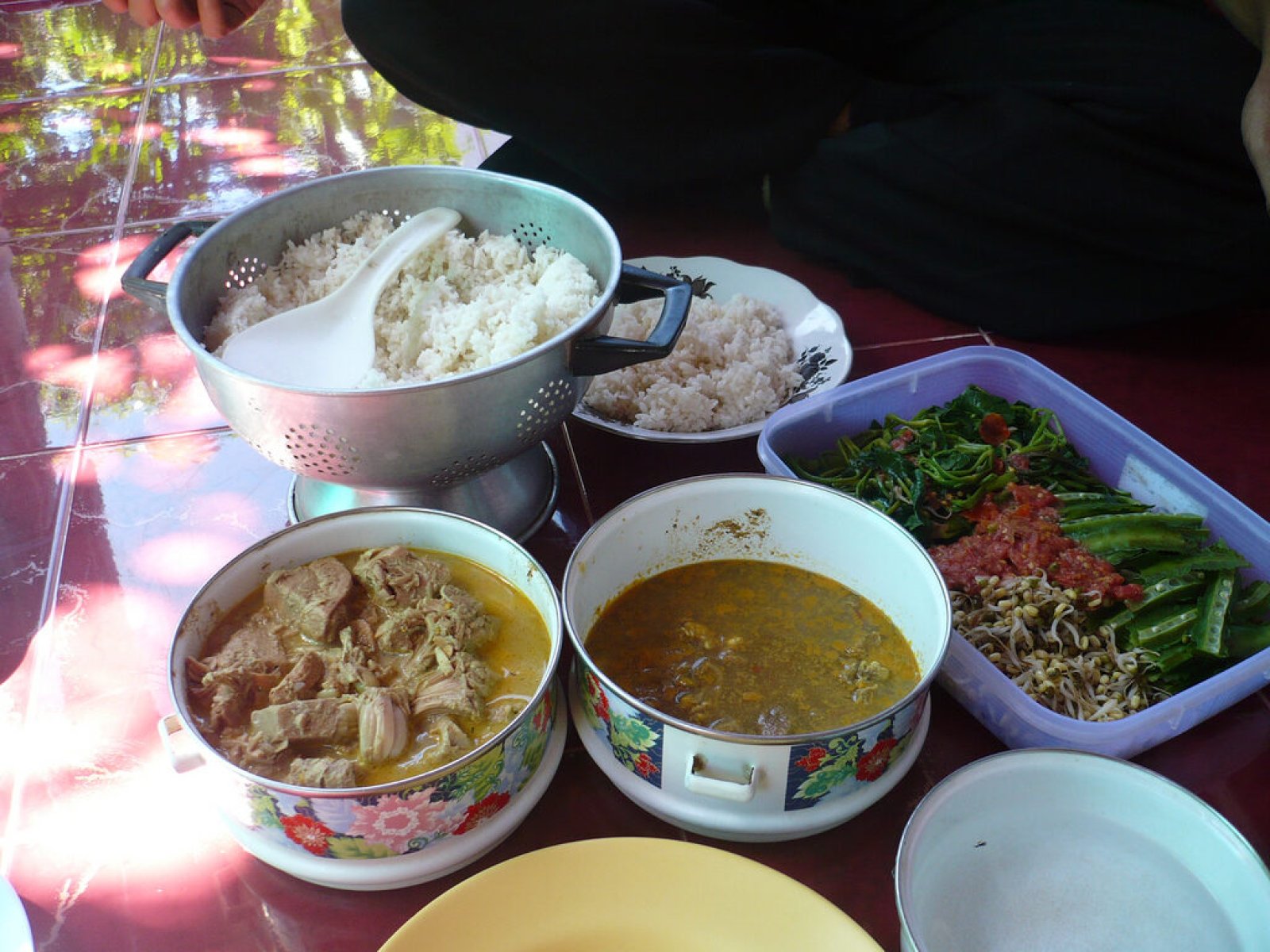
Ares is a Sasak dish made from the soft inner part of a young banana stem, sliced and cooked with coconut milk, chilli, turmeric, ginger, lemongrass, shallots, garlic and other spices. The banana stem is usually salted and rinsed first to remove sap and bitterness, then cooked until it softens into the curry.
The texture is the reason to try it: tender but still slightly fibrous, closer to bamboo shoot than a soft vegetable curry.
Cultural note: a ceremonial Sasak dish
Ares is closely linked with begawe and roahan, the communal meals prepared for major gatherings such as weddings, thanksgiving events and death-related ceremonies. It is practical communal food: made in large quantities, cooked with village ingredients, and shared when the wider family comes together.
7. Bebalung
Bebalung is a Lombok rib soup made with beef, buffalo or sometimes goat bones, cooked until the meat is tender and the broth has taken on the flavour of the bones and spices. It is usually clear rather than creamy, with a savoury-sour edge from tamarind or tamarind leaves.
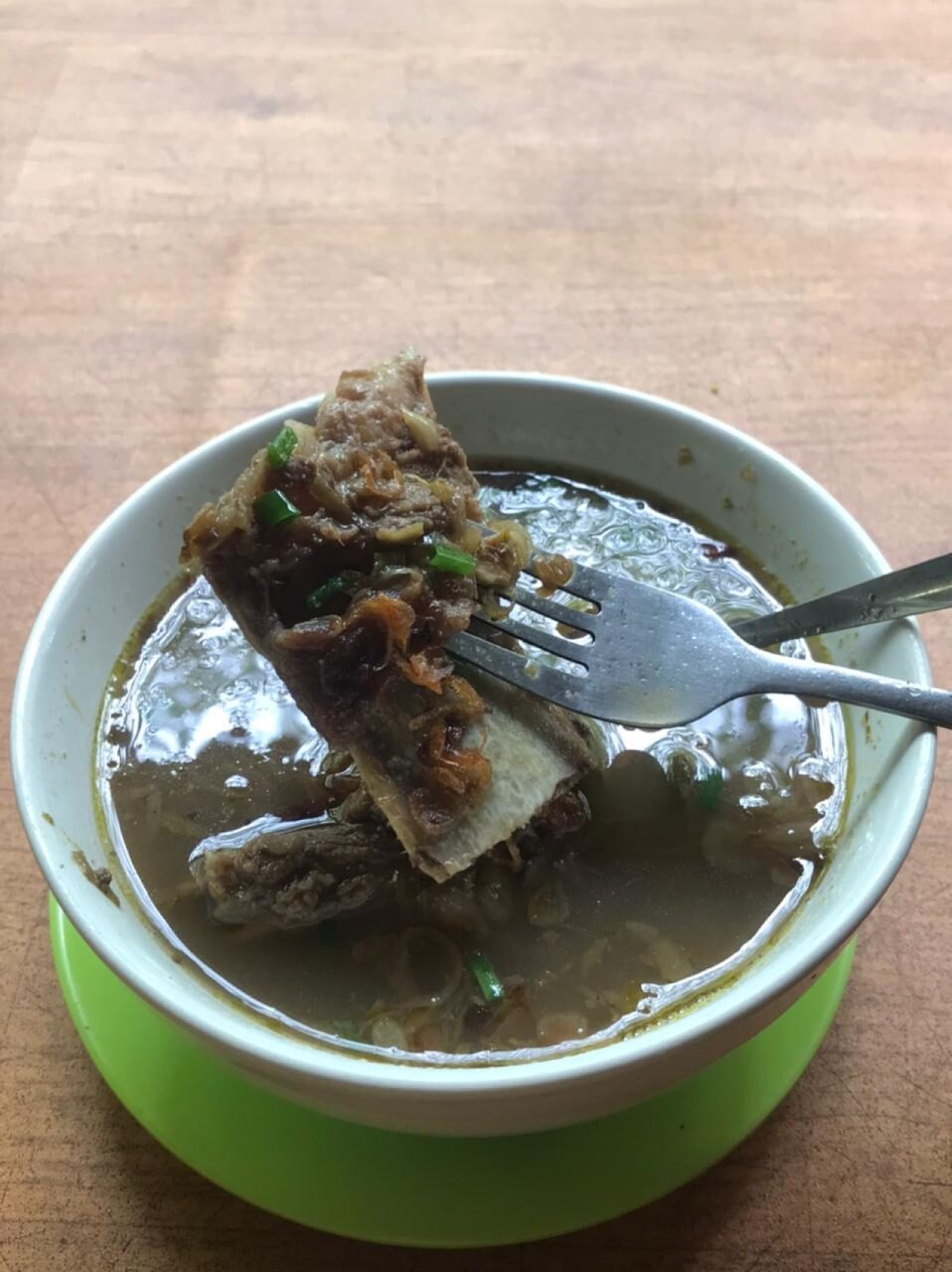
Where to eat it: Look for warungs specialising in Sasak food. Depot Bebalung Kelebet in Mataram is often mentioned, but check recent opening hours before making a special trip.
8. Sate Tanjung
Sate Tanjung is a fish satay from Tanjung in North Lombok, usually made with fresh local fish such as cakalang or tenggiri, or simply whatever is good that day. The fish is mixed with yellow spice paste and coconut milk, then grilled over charcoal until smoky outside and soft inside.

Where to eat it: Look around Tanjung in North Lombok, especially at roadside stalls and local warungs.
9. Kelepon Kecerit
Kelepon kecerit is a Lombok market sweet made from glutinous rice flour, filled with liquid palm sugar, and rolled in grated coconut. It belongs to the same family as klepon, but the Lombok version is usually longer and more oval rather than round.
Why “kecerit”?
The name comes from the little burst of palm sugar inside the cake. Best approach: eat it whole, or at least bite carefully. The palm sugar is meant to stay inside your mouth, not decorate your shirt.

10. Olah-Olah
Olah-olah is vegetables in a thick coconut-based sauce, and I saved it for last because it is the one I would order over and over. The mix varies, but you might see long beans, bean sprouts, winged beans, young fern tips, cabbage and other greens.
The sauce is rich and savoury, usually made with coconut milk and a spice paste of garlic, chilli, galangal, candlenut, shallots and other aromatics. It has that Lombok balance of chilli and coconut, but feels rounder and more comforting than some of the grilled meat and sambal-heavy dishes.

Where to eat it: Look at traditional warungs near agricultural areas like Tetebatu, or restaurants that specifically serve Sasak food.
A quick tip for vegetarian and vegan travellers
Lombok is absolutely doable with dietary restrictions, but you need the magic words. The Sasak kitchen uses a lot of terasi, or fermented shrimp paste, even in vegetable dishes.
For vegetable-forward dishes like ares, plecing kangkung and olah-olah, ask: “Tidak pakai terasi” (no shrimp paste) and “Saya vegetarian” (I am vegetarian). People are usually very hospitable, but you do need to be specific.