
Where to Stay in Ho Chi Minh City: Best Districts for First-Time Visitors
- Home
- Destinations
- Việt Nam
- Ho Chi Minh
- Where to Stay in Ho Chi Minh City: Best Districts for First-Time Visitors
Choosing where to stay in Ho Chi Minh City is one of the first big decisions of a Vietnam trip — here’s how the central districts compare.
Choosing where to stay in Ho Chi Minh City can shape your whole first impression of Vietnam. This practical district guide breaks down the best central areas for first-time visitors, from chaotic District 1 to slower District 3 and food-filled Chợ Lớn.
For a lot of people, especially those travelling from Australia, Ho Chi Minh City will be your first stop in Vietnam.
Flights here are regular, and generally cheaper than flying into Hanoi, which makes choosing where to stay in Ho Chi Minh City one of the first big decisions of the trip.
As Vietnam’s most populated city, with over 9.5 million people living within just 2,000 km², this can be a very chaotic and intense place to start your exploration of the country.
While the city is not a big place, choosing the right district or neighbourhood to base yourself for a few days, or weeks if you are lucky enough, is paramount to seeing, experiencing and exploring everything this city has to offer, without the hassle of booking Grabs, catching taxis or taking buses to get everywhere you want to go.
Want to get to know the city and the food with a local? Read more about our Sài Gòn Scooter Food Tour here - this is the perfect way to get to know the hustle and bustle of Ho Chi Minh City.
Best Districts to Stay in Ho Chi Minh City
Best areas at a glance
The city of Sài Gòn, today officially known as Ho Chi Minh City, is best understood through its districts, each with its own unique style, atmosphere and character.
And while 24 districts seems like an awful lot, as a visitor, and possibly a first-time visitor, there are really only a few Ho Chi Minh City neighbourhoods you need to worry about.
The Best Central Districts to Stay In
For most first-time visitors, the central districts include 1, 3, 5, 4, 10 and 11, and are ideal for tourists. In your planning for your trip to Vietnam, you have likely come across Districts 1 and 3 most commonly.
District 1 - Best for Bougie Travellers
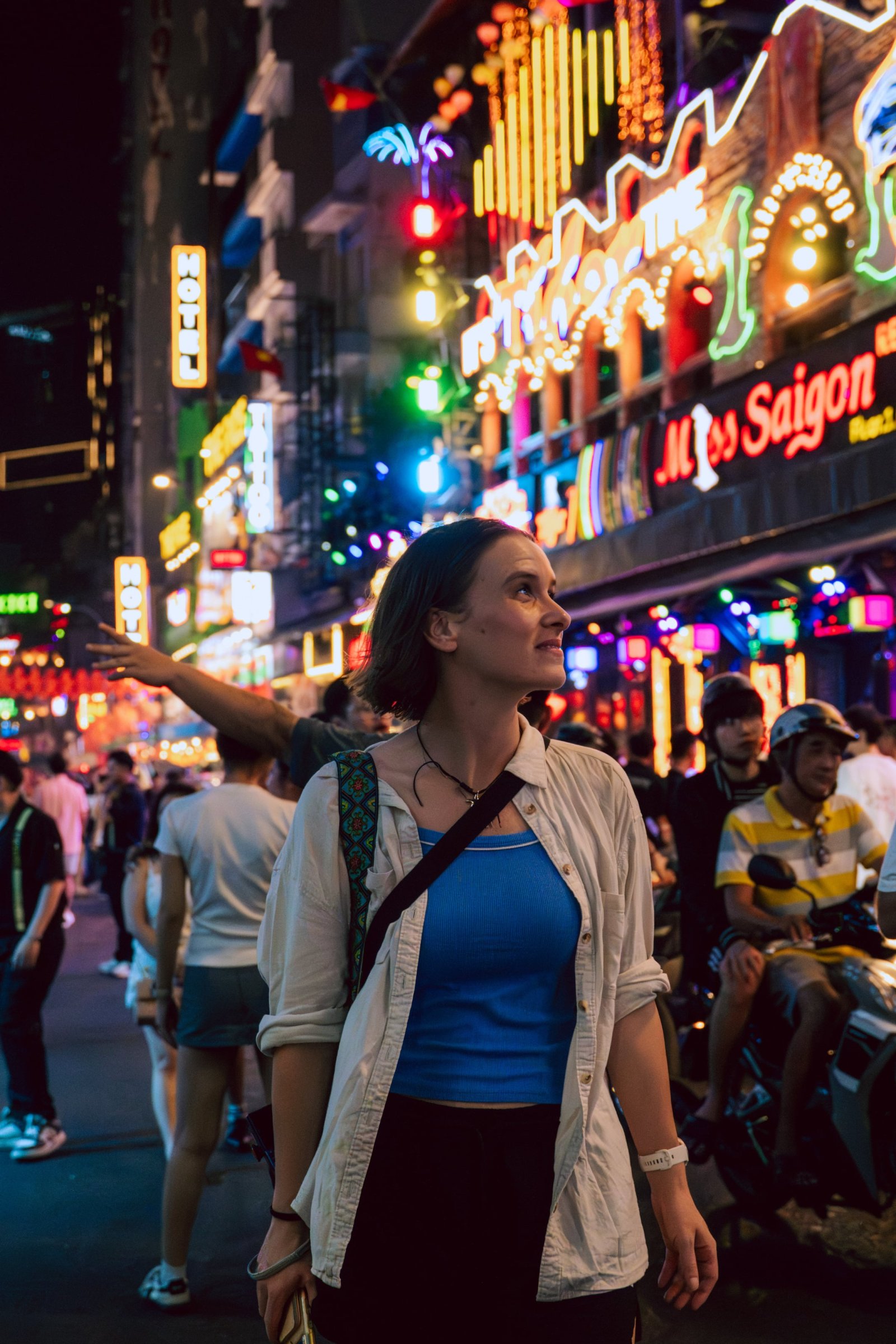

District 1 is best if:
On a map, District 1 looks like the geographical centre of Ho Chi Minh City, and it is nestled right next to some of the other most popular places to explore, including District 3, my personal favourite, and District 4. Here you will find some of the most popular tourist sites, as well as the more Western or upmarket places to eat and drink, including fine dining restaurants, high-end hotels, big shopping malls filled with high-street favourites and high-end fashion, as well as rooftop bars and nightlife spots.
Highlights:
Bến Thành Market: an undercover market famous for souvenirs and a little bit of chaos
Nguyễn Huệ Walking Street: a lovely pedestrian street nestled into the chaos of central Ho Chi Minh City. Very family-friendly with lots of atmosphere
The Café Apartments: a very popular stop, easily viewed from Nguyễn Huệ Walking Street, and very quirky and iconic to visit
Notre-Dame Cathedral of Sài Gòn and Sài Gòn Central Post Office: two beautiful historic buildings that you cannot miss if you love architecture and history
Bùi Viện Walking Street: complete, utter chaos and super famous for a reason. This place has lights, sounds and enough overstimulation that I struggled to sleep after just an hour wandering around!
This district is also home to the Bitexco Financial Tower, which is commonly touted as having incredible panoramic views from its Skydeck. Being the budget travellers we are, we did not visit, but if you are looking for an incredible nighttime view, this might just be the spot!
District 3 - Best for Travellers After a Slower Pace


District 3 is best if:
District 3 is the obvious choice if you want to stay centrally, but want something slightly calmer and a little quieter. It is more famous for history and cultural hotspots, beautiful tree-lined streets, and truly excellent cafés.
During our three days in Ho Chi Minh City, we chose to stay in District 3. We stayed in a small apartment block that gave us everything we could have possibly needed, and was mere metres from plenty of convenience stores, great coffee, and very cheap, local places to grab breakfast.
District 3 Highlights:
War Remnants Museum: a confronting place, and one that can sometimes feel a little overrun with American tourists, but it offers one of the city’s most powerful accounts of the Vietnam War and its aftermath
Tân Định Church: a candy-pink landmark with Gothic flourishes, best paired with a slow wander through the surrounding streets
Tân Định Market: a lively and large neighbourhood market that feels much more authentic than Bến Thành Market. Great food and walls and walls of fabric
Turtle Lake: less a lake and more of a popular local meeting point. This pond sits in the middle of a roundabout and is very fun to explore, if you can brave crossing the busy street carefully to reach it!
Xá Lợi Pagoda: a calm, contemplative pagoda that makes a great rest spot, and a good place to snap some beautiful photos
Secret Weapons Cellar: a small, easily missed wartime site with a remarkable story hidden beneath an ordinary city house
Southern Women’s Museum: an underrated museum exploring Vietnamese women’s roles in family life, culture, resistance and war
If you are planning to visit the War Remnants Museum or Tân Định Church, more commonly known as the Pink Church, plan to go early. These two places have become so busy and so popular that the crowds can really ruin the experience.
Note: Tân Định Church is usually open from 8 am to 11 am, and 2 pm to 5 pm on weekdays. However, you can still view the architecture from the street.
District 5 - Best for Chinatown and Food


District 5 is best known as the home of Vietnam’s largest Chinatown, and some of the best places to try incredible street food, and source all kinds of weird and wonderful herbs, unless you are from Australia, and probably many other countries, in which case look, but do not buy, because you will be hard-pressed to get any of these ingredients back into the country!
Ho Chi Minh City’s District 5 is located at the southwestern end of the city centre, and borders Districts 10, 8, 6, 3 and 1.
Highlights:
Chợ Lớn: Ho Chi Minh City’s historic Chinatown, known for temples, markets and Chinese Vietnamese food
Thiên Hậu Pagoda: atmospheric temple with incense coils, ornate roof details and strong local character
Quan Âm Pagoda: quiet, historic pagoda with colourful details
Nghĩa An Assembly Hall: richly decorated Cantonese assembly hall with carvings, altars and bright ornamentation
Phước An Hội Quán: small but striking temple, good for architecture, colour and detail
Lương Nhữ Học Lantern Street: best for lanterns, decorations and photos, especially before major festivals
Hải Thượng Lãn Ông Street: traditional medicine street lined with herbal shops and old signage
An Đông Market: busy local market for clothing, textiles and wholesale-style shopping
District 5 food: one of the city’s best areas for dumplings, noodles, roast meats and Chinese Vietnamese snacks
Bình Tây Market: technically in District 6, but commonly visited with Chợ Lớn. Best for market atmosphere and architecture
District 10 - Best for More Authentic Sài Gòn


District 10 is great if you have some extra time to explore Ho Chi Minh City and you want to find a few hidden gems and some of the less touristy locations.
Here you will find plenty of smaller, traditional temples and pagodas, as well as local places to shop for clothing and textiles, and local food markets.
District 10 Highlights:
Hồ Thị Kỷ Flower Market: colourful flower stalls by day, busy food-street atmosphere by night. One of District 10’s best stops
FITO Museum: small, well-presented museum on Vietnamese traditional medicine, with herbs, tools and beautiful timber interiors
Việt Nam Quốc Tự Pagoda: large Buddhist pagoda on Ba Tháng Hai Street, good for a short cultural stop away from the central tourist trail
Cao Đài Temple District 10: colourful temple linked to Vietnam’s Cao Đài religion, which blends several spiritual traditions
Vạn Hạnh Mall: useful air-conditioned stop for shopping, food, cinema and a break from the heat
Hòa Bình Theatre: local theatre and event venue. Worth checking only if there is a show on
Sư Vạn Hạnh area: practical evening wander for cafés, casual food and local student energy, especially around Vạn Hạnh Mall
I adored Hồ Thị Kỷ Flower Market and actually visited as part of an excellent Ho Chi Minh City scooter food tour on my first night in Vietnam. This is an experience I highly recommend, especially if this is your first trip to Ho Chi Minh City, or Vietnam in general. You can read more about that here.
Other Districts to Explore in Ho Chi Minh City if You Have More Time
District 7
District 7 is one of Ho Chi Minh City’s most modern, organised districts, with wide streets and shopping centres. It is best known for Phú Mỹ Hưng (modern urban area), Crescent Mall (shopping centre) and Cầu Ánh Sao (pedestrian bridge), making it useful for shopping, dining or an easy evening walk.
Thủ Đức City
Thủ Đức City sits northeast of central Ho Chi Minh City and combines the former District 2, District 9 and Thủ Đức District. It is a fast-developing area with universities, new apartment zones, tech precincts and growing business districts. The main visitor stops are Thủ Thiêm New Urban Area (modern riverside precinct), Suối Tiên Theme Park (amusement park), Sài Gòn Hi-Tech Park (technology precinct) and riverside cafés around the old District 2 side (cafés and dining).
Bình Thạnh District
Bình Thạnh is a useful bridge between old Sài Gòn and the city’s newer high-rise face. Its obvious landmark is Landmark 81 (skyscraper and shopping complex), Vietnam’s tallest building, with shopping, dining and skyline views from the Vinhomes Central Park area (riverside park and dining area). For something quieter, head towards Thanh Đa (riverside neighbourhood) and Bình Quới (garden restaurants and riverside area) for river scenery and local food.
Gò Vấp District
Gò Vấp is a busy, mostly local district northwest of the centre. It has good food streets, affordable shopping and a real residential feel, with Gia Định Park (large public park) and Hạnh Thông Tây Church (Catholic church) among its more useful stops.
Phú Nhuận District
Phú Nhuận is central, convenient and excellent for eating, sitting between District 1, Tân Bình and the airport side of the city. It is known more for cafés, street food and neighbourhood life. Phan Xích Long Street (food and café street) is the main draw, with a dense mix of Vietnamese food, cafés and international restaurants.
Củ Chi District
Củ Chi sits well outside the city centre and is best visited as a half-day or full-day trip. Its major attraction is the Củ Chi Tunnels (wartime tunnel network), used during the Vietnam War, with sections open for visitors to enter and explore. Other stops include Bến Dược Memorial Temple (war memorial), fruit gardens and farm visits.
Nhà Bè District
Nhà Bè is a southern riverside district with a quieter, more suburban feel than central Ho Chi Minh City. It is best for river scenery and seafood. The most useful stops are the Rạch Đĩa River area (riverside scenery) and local floating seafood restaurants.
Cần Giờ District
Cần Giờ is Ho Chi Minh City’s coastal escape, around 50 to 60 km from the centre, and is best as a nature-focused day trip. Its highlight is the Cần Giờ Mangrove Biosphere Reserve, a UNESCO-listed mangrove ecosystem with birds, monkeys, crocodiles and boat trips through the wetlands. Also consider Vàm Sát Ecological Park (wetland park), Monkey Island (wildlife stop) and Cần Thạnh Beach (coastal stop), especially if you want a break from the hustle and bustle of the city.
While it would be almost impossible to visit every place on this list, especially if you are only in Ho Chi Minh City for a short time, it is worth getting to know the different districts before you book your accommodation, and well before you arrive in Vietnam. If you are deciding where to stay in Ho Chi Minh City, this will save you a lot of drama trying to get around the city to see all the sights you are interested in.
And learn from us! Here you can read about the 18 places we visited during our three days in Ho Chi Minh City, and whether or not they are worth your time!


Explore More Ho Chi Minh City

Saigon Scooter Food Tour Review
A four-hour introduction to Ho Chi Minh City through street food, flower markets, local stories, and the unexpected joy of seeing Saigon traffic from the back of a…

18 Places to Visit in Ho Chi Minh City
Everything we saw, experienced, and learned over two days exploring Ho Chi Minh City on foot, so you can plan a slightly less chaotic visit.

Where to Stay in Ho Chi Minh City: Best Districts for First-Time Visitors
Choosing where to stay in Ho Chi Minh City can shape your whole first impression of Vietnam. This practical district guide breaks down the best central areas for…

Ho Chi Minh is Districtless
A scooter-tour conversation in Ho Chi Minh City turned into a deep dive through villages, communes, emperors, colonial administrators, household registers and Vietnam’s 2025 administrative reform.