
Cape Raoul
To the very edge of the earth
- Home
- Destinations
- Australia
- Tasmania
- Cape Raoul
Cape Raoul
A challenging and exhilarating walk to one of Tasmania's most dramatic coastlines, and some of the best dolerite column formations on the planet.
At a Glance

The Cape Raoul walk is 14km return and typically takes around 5 hours. Allow extra time at the cape itself, as there are multiple lookouts worth exploring, and it's a wonderful spot for lunch.
This is a Grade 4 walk. The track is long and highly variable. You'll encounter steep rocky sections, and more muddy parts (depending on weather), as well as narrow stretches through dense tea tree scrub. It's not technically difficult, but the distance and terrain variability mean you should be reasonably fit and come well prepared.
The walk begins at the Cape Raoul trailhead on the Tasman Peninsula, accessible via Stormlea Road.
This walk is best suited to walkers with some experience, but in good weather can be a great walk to challenge yourself on if you are a beginner.
The highlights are many and keep changing throughout the walk. A standout early moment is the first lookout, where the terrain leading out to the cape comes into view. Looking across to the cape makes it feel almost impossible to reach, but it isn't. The finale at the cape itself is unforgettable, with views across to Cape Pillar, Tasman Island, and the distant east coast of Bruny Island.
This walk is ideal if:
What to Expect on the Cape Raoul Walk
Cape Raoul is one of those walks that's hard to describe as a single experience, because the landscape shifts so dramatically from start to finish. The terrain at the trailhead looks nothing like what you'll find halfway along, and the halfway point is vastly different from the views and experience at the cape itself.
Expect:
A highly varied track, including forest, exposed ridgeline, tea tree scrub, and open clifftops
Short but steep climbs and descents throughout
Narrow, sometimes muddy sections requiring care underfoot
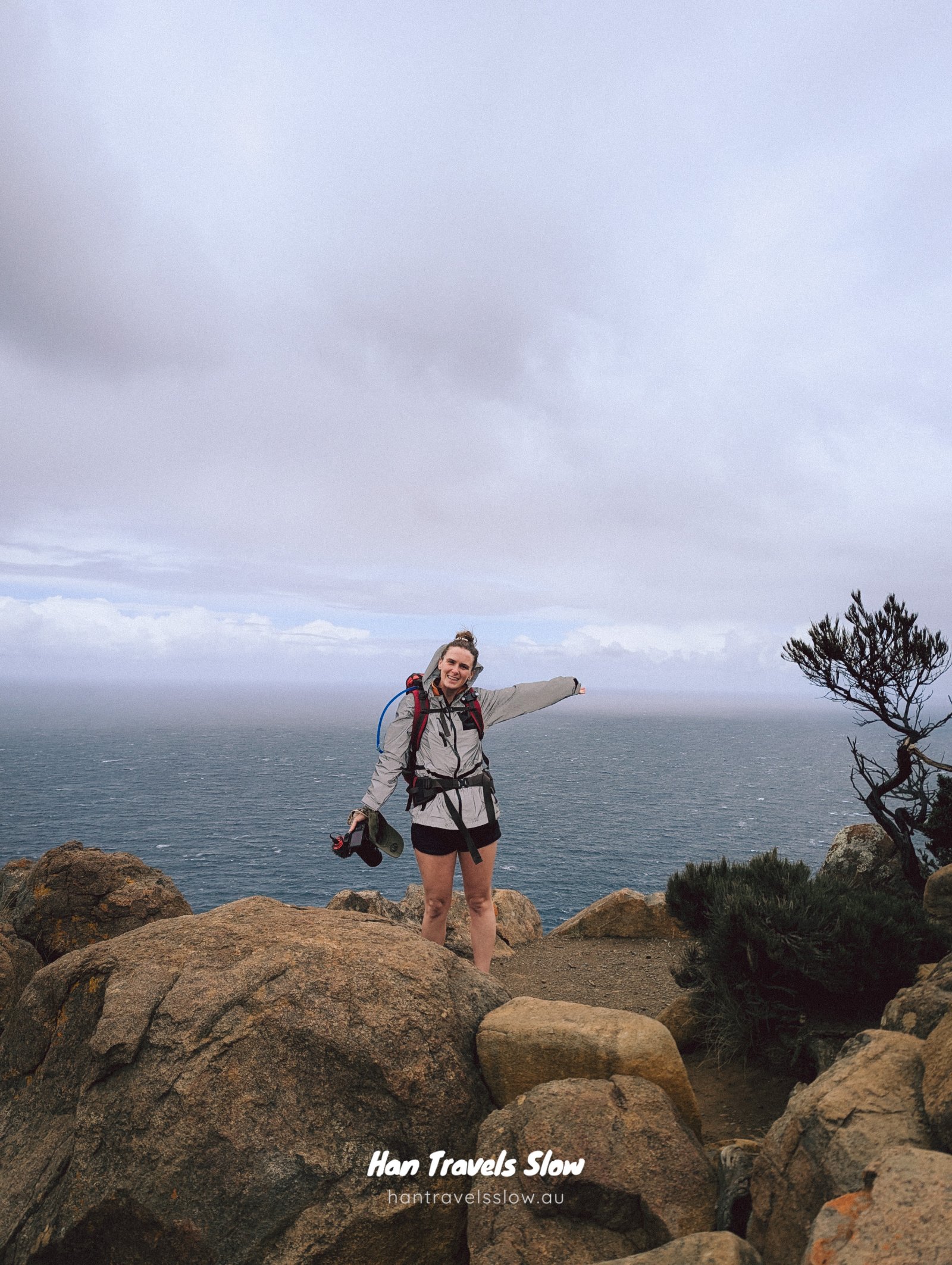
High winds, potentially a lot of it, particularly in the tea tree forest and on the exposed cape
Breathtaking views of the Tasman Peninsula's coastline opening up as you go
Towering dolerite columns at the cape that rank among the best examples in the world
Wildlife including Pacific Gulls, Sea Eagles, and if you're patient (and lucky) you might spot whales and dolphins!

Best Time to Walk to Cape Raoul
Spring and autumn offer the most reliable walking conditions. Temperatures are comfortable, and the track is firmer with fewer muddy sections.
Summer brings more stable weather and longer days, which is useful given the walk's length. It is also the busiest season on the Tasman Peninsula, so expect more people on the track.
Winter walks are possible for well-prepared walkers, but wind on the exposed cape can be fierce. That said, winter is also the best season for whale sightings from the cliff face. You'll have the chance to spot southern right whales, and humpbacks are known to pass through this stretch of coastline.
Whatever the season, always check the forecast, especially for wind warnings, before setting out.

Track Conditions and Things to Be Aware Of
The track is well-defined throughout, but be prepared for it to throw a few things at you.
The first section of the walk winds through tea tree forest, which provides good shelter. On blustery days, the sound of the wind whipping through the canopy is incredible. After the forest, the track opens up onto more exposed and flatter terrain as you approach the cape.
There is no water available on the track, so carry enough for the return journey, at least two litres per person, more in summer.
The track comes quite close to cliff edges in several places near the cape. Take care in windy conditions and keep well back from the edge.
Walking Through the Tea Tree Forest
The first section of the walk takes you through dense tea tree scrub and regrowth forest. It's a very moody and atmospheric stretch, particularly when the wind picks up and moves through the canopy above you.
This part of the track also carries some history. Evidence of past land use can be spotted if you look carefully, though the forest has reclaimed much of what was once here.
As the track progresses, it begins to reveal glimpses of the coastline below, and the mood of the walk starts to feel more coastal, with dramatic sea views opening up.


The First Lookout
One of the early highlights of the walk is the first major lookout, which delivers a view that, if you haven't yet spent a lot of time hiking Tasmania's sea cliffs, will be quite incredible.
Looking left, you can see the full sweep of the terrain between where you're standing and the tip of the cape. It looks almost implausibly far, but despite appearances, the walk out to the cape is very manageable, and less strenuous than it looks from this vantage point.
This lookout is a good place to take stock, have a snack, and snap some great photos of Cape Raoul in the distance.


At Cape Raoul
The cape itself is super rewarding, with multiple distinct lookout points, each offering a different perspective.
The main Cape Lookout faces across to Cape Pillar and Tasman Island, with the east coast of Bruny Island visible on a clear day.
Seal Lookout is arguably the more interesting of the two, as it faces back along Cape Raoul and offers very good views of the dolerite columns rising up out of the ocean.
This is an excellent spot to stop for lunch, explore the different vantage points, and spend some time gazing out over the Tasman Sea.
The Dolerite Columns of Cape Raoul
The towering rock formations visible from Cape Raoul are some of the finest examples of columnar dolerite in the world.
These columns form through a process involving ancient volcanic activity and the slow cooling of rock over millions of years. The result is a series of tall, regular columns that look almost geometric. Similar formations appear at Giant's Causeway in Northern Ireland, Devils Tower in the USA, and Fingal's Cave in Scotland, but the scale of what you see here is among the best anywhere on the planet.


Wildlife at Cape Raoul
Cape Raoul is one of the more rewarding wildlife spots on the Tasman Peninsula, particularly from the cliff edge. This spot is home to many of Tasmania's "blonde" or light-coloured echidnas. Look for freshly disturbed soil along the track edges, as this is a sign that an echidna has been foraging nearby.
Pacific Gulls are a constant presence, swooping and gliding along the cliff faces where they nest in the rock. White-bellied Sea Eagles are also regularly sighted in this area.
From the clifftop, patient observers may spot bottlenose dolphins, humpback whales, southern right whales, and if you are extra lucky, orcas moving through the waters below.
Wildlife at Cape Raoul
Cape Raoul is one of the more rewarding wildlife spots on the Tasman Peninsula, particularly from the cliff edge. This spot is home to many of Tasmania's "blonde" or light-coloured echidnas. Look for freshly disturbed soil along the track edges, as this is a sign that an echidna has been foraging nearby.
Pacific Gulls are a constant presence, swooping and gliding along the cliff faces where they nest in the rock. White-bellied Sea Eagles are also regularly sighted in this area.
From the clifftop, patient observers may spot bottlenose dolphins, humpback whales, southern right whales, and if you are extra lucky, orcas moving through the waters below.


Come on the walk with me
Click the image below to watch this walk on Instagram

Explore Some More

Bivouac Bay
I love a walk with plenty of variety, and this one made the kilometres feel like mere metres!

Duckhole Lake
An accessible adventure into Tasmania’s wild south, and a perfect introduction to its karst landscapes.

Lake Esperance
A walk through waratahs and a lush Tasmanian alpine landscape

South Cape Bay
A beautifully varied walk to the very end of the road, and the edge of the continent.

Hartz Peak
A short but impactful hike to the summit of Hartz Peak, showcasing a dazzling array of plant diversity!

Tahune Airwalk
A spectacular elevated walkway through the forest canopy, high above the rivers of Tasmania's wild southwest.

Fluted Cape
If you only have time for one short walk on Bruny Island, make it this one.

Labillardiere Peninsula
Pack plenty of snacks and your swimmers, and turn this hike into a full-day adventure

Waterfall Bay
Spectacular coastal views, dramatic rock formations, and some of the best wildlife spotting on the Tasman Peninsula, all within a casual clifftop stroll.

Cape Raoul
A challenging and exhilarating walk to one of Tasmania's most dramatic coastlines, and some of the best dolerite column formations on the planet.

Coal Mines Historic Site
Crumbling convict-era ruins, underground cells, and sweeping views of Norfolk Bay, all within a short and easy walk.

Cape Hauy
A stunning loop walk along one of Tasmania's most dramatic coastlines, with towering dolerite cliffs, endless ocean views, and some of the best whale spotting on the peninsula.