
Pandani Grove Nature Walk
Tasmania's most famous plants
- Home
- Destinations
- Australia
- Tasmania
- Pandani Grove Nature Walk
Pandani Grove Nature Walk
A delightful little walk through some of Tasmania's most famous plants
At a Glance

30 to 40 minutes, depending on how long you spend looking at the lake and watching for platypuses at Eagle Tarn.
Yes. It's an easy, fun walk with plenty of interesting things to see including crystal-clear water, strange-looking plants, and the chance to spot a platypus.
At Lake Dobson in Mount Field National Park. You'll need to drive about 14km beyond the Mount Field Visistors Centre to reach the start of this walk. Park in the gravel car park and look for the signs leading to the lake.
They're Pandani trees, a type of heath plant that grows only in Tasmania's alpine regions. They look tropical but are perfectly adapted to the harsh mountain environment.
Maybe! Platypuses are sometimes spotted at Eagle Tarn, just beyond the Pandani forest, so you have a good chance if you're patient and keep an eye out for ripples on the water's surface.
This walk starts on the banks of Lake Dobson and follows its shoreline for much of the route.
But the real highlight comes when you leave the lake behind and step into a grove of towering Pandani trees. It's a short, easy walk that's great for kids, and platypuses are commonly spotted at Eagle Tarn.
This walk is ideal if:
What to Expect on the Pandani Grove Nature Trail
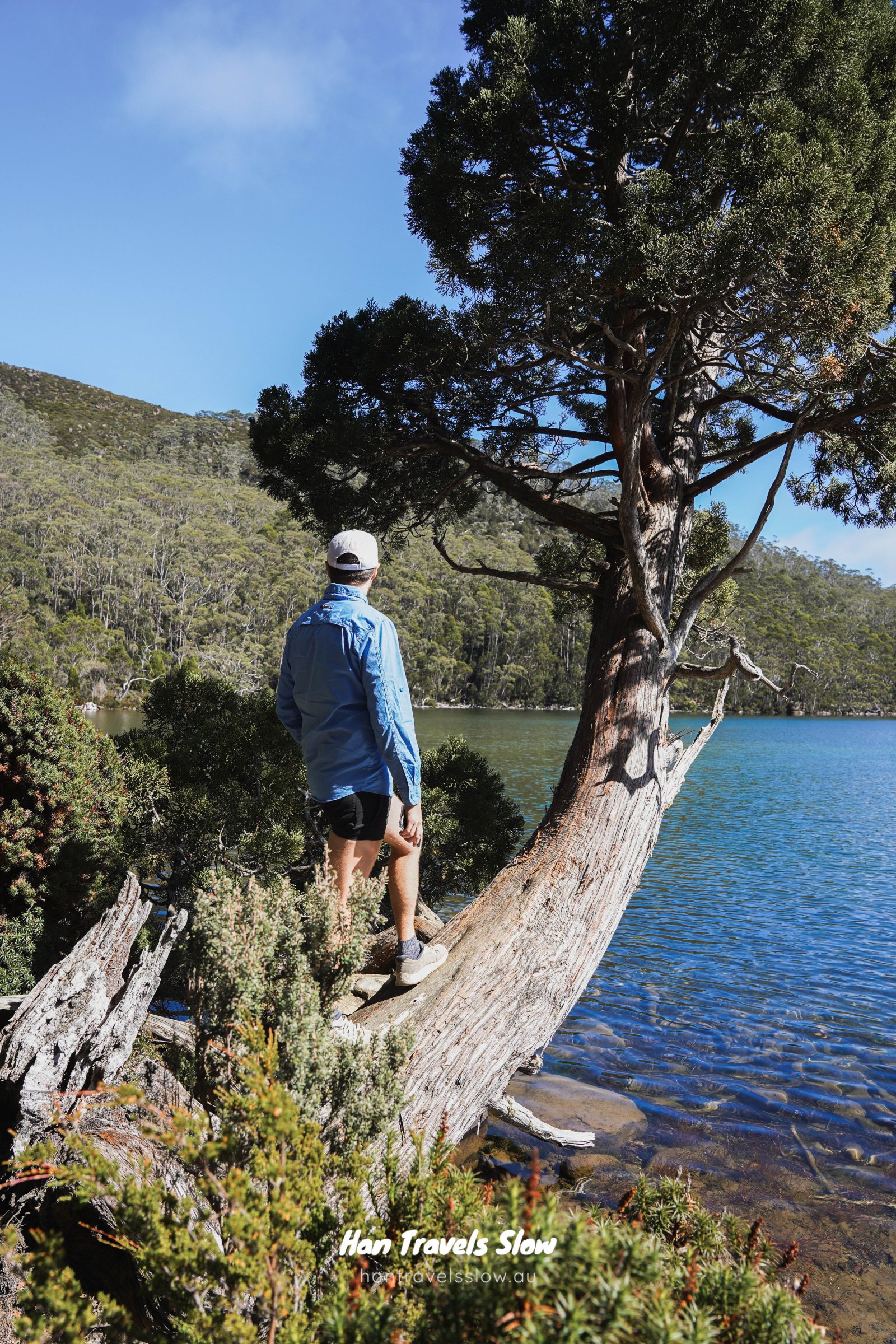
You'll start on the banks of Lake Dobson, a stunning crystal-clear lake with dazzling blues, greens, and turquoise hues. The track follows the shoreline for much of the way, giving you plenty of time to admire the water.
Crystal-clear lake water with astonishing clarity
A straightforward track following the lake's shoreline
Denser forest as you move away from the water
Towering Pandani trees forming a grove on the far side of the lake
Platypus spotting opportunities if you're patient and watch for ripples
An otherworldly atmosphere that feels more tropical than alpine

Best Time to Visit Lake Dobson
Pandani Grove Nature Walk is accessible year-round, though conditions vary considerably by season.
Spring (September to November) brings good water levels and new growth. The weather is warming up, making it a pleasant time to walk around the lake. Bird spotting is at its best.
Summer (December to February) is the warmest and busiest season. Lake Dobson will be at its most inviting, with brilliant colour in the water. Platypuses are active in the warmer months, and you might even brave a dip in the lake!
Autumn (March to May) offers cooler temperatures and is quieter than summer. The lake remains clear and beautiful, and platypuses are still around.
Winter (June to August) brings the highest rainfall and snow to the area. This can be the most magical time to do the Pandani Grove Nature Walk, and explore the rest of Mount Field National Park. Days are shorter, so plan accordingly.
Track Conditions and Things to Be Aware Of
The track is easy and straightforward, suitable for most fitness levels. It's well-maintained and marked.
Watch for wet sections, particularly near the lake and around Eagle Tarn. The ground can be muddy after rain. Sturdy footwear is recommended.
If you're hoping to spot platypuses, be patient and quiet. Move slowly around Eagle Tarn and watch for ripples on the water's surface. The calm, clear water makes spotting them relatively easy if one is around.
Walking Around Lake Dobson
The walk begins on the banks of Lake Dobson. The water is remarkably clear to the point that you can spot lots of fallen logs in the water. Spend a moment here taking in the colours before heading off around the lake.
The track follows the shoreline, and as you walk, the forest gradually becomes denser. At first, you'll notice a single tall Pandani tree. Then another. Then a cluster, before suddenly you find yourself immersed in a grove of these towering, shaggy giants.
These plants look like they belong in a tropical rainforest, but they're perfectly adapted to Tasmania's harsh alpine environment. The contrast between the clear, calm lake and this forest of strange-looking plants creates an otherworldly atmosphere.
As you emerge from the forest, you'll reach Eagle Tarn, a small, shallow pool. Platypuses are often spotted here. If you're patient and keep an eye out for the telltale ripples on the water's surface, you may spot one. With such calm, clear water, if a platypus is around, it shouldn't be too hard to see.


Ponder While You Wander
The Pandani trees you see here are found only in Tasmania's alpine regions—nowhere else in the world. Don't confuse them with tropical Pandanus plants, which are palm-like and found in warmer climates. The Pandani (Richea pandanifolia) is its own unique species perfectly suited to Tasmania's high-altitude landscapes.
Though you'll see small Pandani plants scattered across Tasmania's alpine regions, they can grow up to 12 metres tall. The dry, brown leaves you'll notice on the lower part of the plant form a protective layer around the trunk. The vibrant, bright green leaves at the top are the newest growth, often curling slightly at the ends.
Pandani belong to the Richea genus, which includes 11 species. Nine of those species are found only in Tasmania, making Tasmania the Pandani capital of the world.


Come on the walk with me
Click the image below to watch this walk on Instagram

Explore Some More

Bivouac Bay
I love a walk with plenty of variety, and this one made the kilometres feel like mere metres!

Duckhole Lake
An accessible adventure into Tasmania’s wild south, and a perfect introduction to its karst landscapes.

Lake Esperance
A walk through waratahs and a lush Tasmanian alpine landscape

South Cape Bay
A beautifully varied walk to the very end of the road, and the edge of the continent.

Hartz Peak
A short but impactful hike to the summit of Hartz Peak, showcasing a dazzling array of plant diversity!

Tahune Airwalk
A spectacular elevated walkway through the forest canopy, high above the rivers of Tasmania's wild southwest.

Fluted Cape
If you only have time for one short walk on Bruny Island, make it this one.

Labillardiere Peninsula
Pack plenty of snacks and your swimmers, and turn this hike into a full-day adventure

Waterfall Bay
Spectacular coastal views, dramatic rock formations, and some of the best wildlife spotting on the Tasman Peninsula, all within a casual clifftop stroll.

Cape Raoul
A challenging and exhilarating walk to one of Tasmania's most dramatic coastlines, and some of the best dolerite column formations on the planet.

Coal Mines Historic Site
Crumbling convict-era ruins, underground cells, and sweeping views of Norfolk Bay, all within a short and easy walk.

Cape Hauy
A stunning loop walk along one of Tasmania's most dramatic coastlines, with towering dolerite cliffs, endless ocean views, and some of the best whale spotting on the peninsula.