
Gili Nanggu, Sudak & Kedis: Private Boat Tour From Senggigi
Total island paradises, yes plural
- Home
- Destinations
- Indonesia
- Lombok & the Gilis
- Gili Nanggu, Sudak & Kedis: Private Boat Tour From Senggigi
Gili Nanggu, Sudak & Kedis: Private Boat Tour From Senggigi
At a Glance

No. Those three are the well-known northern Gilis, the ones with beach clubs, hotels and regular fast boats. Gili Nanggu, Sudak and Kedis sit off the southwest coast near Sekotong, a different stretch of Lombok entirely, and while they are still little islands, they are very different with basically no accommodation, barely any infrastructure, and far fewer people.
Honestly, not quite, in terms of diversity. We didn’t see turtles, and there’s less diversity of tropical fish than you’ll typically get around Gili Trawangan or Meno. What you do get is excellent visibility, healthy coral, and swarms of small reef fish.
Yes, with caveats. My mum joined us and managed fine, but the steps in and out of the boat are steep, and the only toilets on the islands are squat toilets. Chin and the boat crew were attentive and patient, helping her in and out, but if mobility is a real concern, it’s worth messaging the operator directly before booking.
We booked through our hotel, Cafe Wayan Cottages in Senggigi, and it was completely seamless. If you’re booking ahead of arriving in Lombok, or just prefer to lock something in online, GetYourGuide and Klook both list similar tours to this stretch of southwest Gilis, worth comparing if you want flexibility on dates.
Not in the price we paid. Lunch can be purchased at a small warung on Gili Sudak and you pay there directly. It’s cheap and it’s simple local food, and it is delicious.
The southwest Gilis do not get nearly as much attention as Trawangan, Air and Meno, and honestly, that is great news. The northern Gilis are great, but if you are visiting Senggigi, or Kuta Lombok, you’ve got to add this super fun and very relaxed day trip to your itinerary.
Did you know?
In Indonesian and local Lombok dialects, gili simply means “small island.” So when you see “Gili” in front of an island name, it is a descriptor, not a proper name — Gili Nanggu is literally just “Nanggu Island.” There are dozens of gilis scattered around Lombok’s coastline, which is part of why “going to the Gilis” means something different depending on who you ask. And if you have ever said “the Gili Islands” — technically you have just said “the Small Island Islands.”
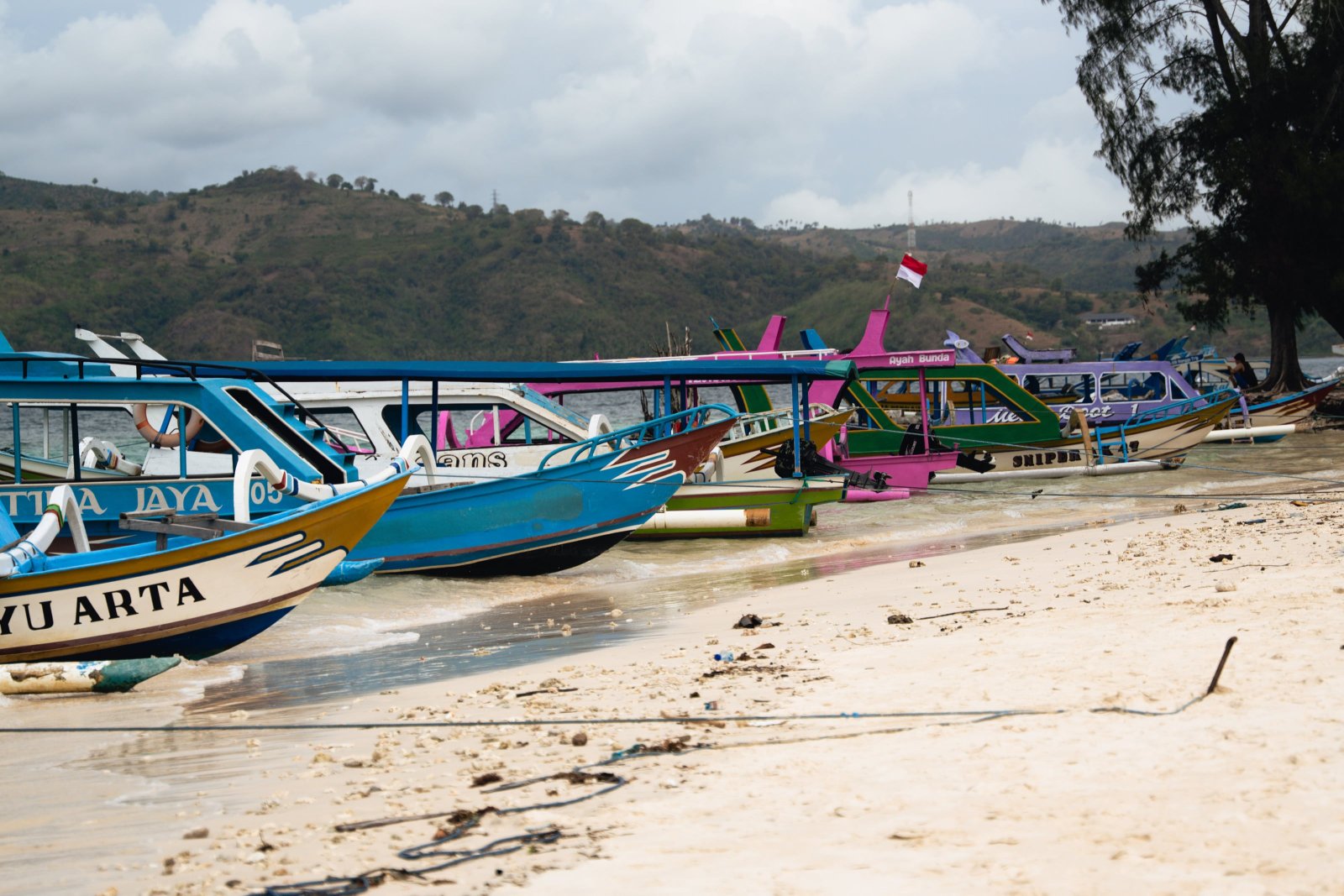
Gili Nanggu, Gili Sudak and Gili Kedis sit off the Sekotong coast in southwest Lombok, about 1.5 hours from Senggigi, or 2 hours from Kuta Lombok. They lie just off the coast of Lombok, amongst a series of many other gilis which all vary wildly in size. For the most part there are no hotels, minimal infrastructure, and far fewer people than you would find on the popular northern Gilis.

We did this as a private day trip through Lombok Route which was recommended to us through our homestay, Cafe Wayan Cottages, which we adored!
Our guide for the day was Bapak Chin, and this might have been one of my all time favourite day trips, and the most special way to spend time with my mum on holidays — we are both water babies and love the beach!
Senggigi to Sekotong: the drive in
We were picked up from our hotel in Senggigi Beach at 9:00 am. It was meant to be four of us, but Dad woke up feeling unwell, so it ended up being me, Chris and Mum. The drive to Sekotong took about 1.5 hours, and it didn’t feel long at all. You get a really good look at the city of Mataram as your drive, and then the roads become so beautiful and scenic as you skirt along the coast, heading up and down coastal cliffs with views out across the strait.

Chin, our guide for the day, had water and a box of local rice-based snacks waiting in the car, and kept us fed and watered the entire day without us asking even once. The standout was something I can only describe as a banana leaf push-pop. It was a coiled banana leaf with a sweet, almost caramel-like jelly set inside it, and you push the bottom of the coil up and the jelly pops out the top exactly like an old-school push-pop sweet. I have no idea what it’s actually called, but it was super impressive.
Bapak Chin?
Bapak is an Indonesian term of respect meaning “father” or “sir,” used when addressing older men. It is the equivalent of calling someone “Mr” in English, though it carries a warmer, more familial tone than a formal title. You will hear it used constantly in everyday Indonesian conversation — often shortened to Pak in casual speech.
Somewhere around Mataram we passed a cemetery, and Chin delivered one of the best dad jokes I have heard in a while. I pointed out a large cemetery through the car window. Chin replied with, “Is Chinese hotel. Check-in only.”
The boat out
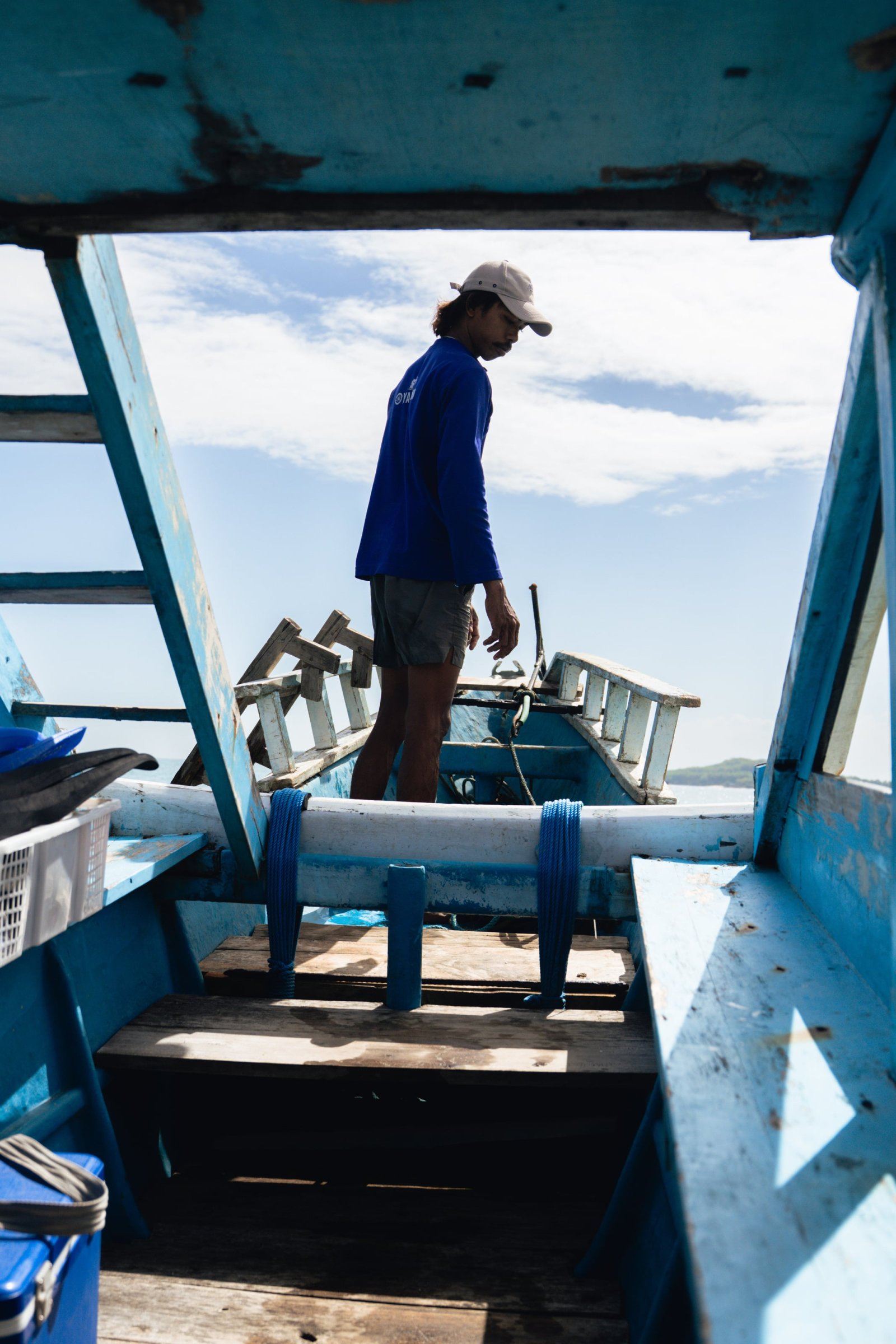
The boat itself was a small traditional jukung, an outrigger canoe style you’ll see all over Lombok and Bali, and most of Indonesia: narrow, with wooden supports running out either side, ours powered by an outboard rather than a sail. There was a driver, a snorkelling guide, and Chin. Neither of the first two spoke much English, and Chin was happy to chat as we travelled without ever feeling like he was filling silence for the sake of it.
The boat was small, and we did need to crouch to get to our seats, but it wasn’t cramped. With just the three of us on board it never felt uncomfortable. The water was calm, and the crossings between the mainland and each of three islands were scenic, and speedy.

Gili Nanggu: the snorkelling
Gili Nanggu is the first stop and the main event for snorkelling. The fish life isn’t as varied as what you’ll find around Gili Trawangan, Meno or Air. I didn’t see any turtles, and there were fewer coral fish species, but there were huge numbers of small tropical fish, and they swarmed around us so many times, it felt like swimming through a cloud of fish. The visibility was excellent, and while there were a large number of other tour groups in the water with us the water never felt super crowded, and our guide was happy to let us swim around for as long as we wanted rather than hurrying us along to the next stop.
My favourite sea creature of the day was a bright blue starfish our snorkelling guide found on the seabed and brought up for us to hold. He kept it submerged in water the whole time and handled it with real care. I wouldn’t have picked it up myself — picking up marine life isn’t something I’m usually comfortable with, but watching how gently he handled it was comforting.
The snorkeling is pretty shallow, but if you are into taking duck dives under water, swimming out to the drop off — which is really only a short way off shore — offers great coral bombies to explore, and loads of coral grottos where larger fish can be found hiding in the dark.
Back on the beach afterwards, Chin produced trays of cold, fresh watermelon, which is possibly the best post snorkelling snack. We ate, dried off, and got back in the boat for the short hop to Gili Sudak.

Gili Sudak: lunch and the floating fishing huts
Gili Sudak is the largest of the three islands, and also the lunch stop for the day. There’s a small, simple warung and not much else in the way of options, but plenty of delicious local options to choose from. I had a kelapa muda (young coconut) and tempe goreng. Mum and Chris had mie goreng and cah kangkung with cold drinks. The warung prices were maybe a touch more expensive given it’s on an island, but still great value, and super laid back vibes.

We sat in the shade, ate, and watched boats moving between the islands. Looking back across the water towards mainland Lombok, you can see a number of strange wooden structures floating offshore. They look to be a cross between a fishing shack and, if I’m honest, something out of a Viking burial scene. Chin told us they’re called bagan, floating platforms local fishermen use for night fishing, mostly to catch squid, and that fishermen will actually sleep out on them overnight during the season.


Tell me more: bagan
A bagan is a traditional Indonesian fishing platform or vessel fitted with lift nets and bright lights, used for night fishing. It is designed to catch small fish, squid and shrimp by drawing them toward the light.
Gili Kedis: an island out of a storybook
Gili Kedis (often spelled “Bedis” on Google Maps) is almost comically tiny. Some reviews online claim you can walk around it in five minutes. Realistically, it’s less than that. Mum and I swam the full perimeter of the island twice and worked out it came to roughly 275 metres each lap — less than 500 metres of swimming, which is less than either of us would normally do in a pool on a Sunday afternoon. The water is a brilliant blue, with a sandy bottom that makes it one of the best spots I’ve swum in all of my travels!


There’s shade if you want it, and sunny sandy patches for those who like to toast themselves. There is also a tiny shop selling cold-ish drinks and snacks. We arrived before the bulk of the day’s tourists, so we had the water pretty much to ourselves. I can imagine that’s a very different experience in peak season, July and August especially, when Lombok’s visitor numbers climb. In mid-June, at least, it was quiet.

Mum and I are such water babies, and floating in the shallows, chit-chatting about other places we’ve swum together over the years was such a highlight for me.
Gili Kedis or Gili Bedis?
A small naming quirk that is worth knowing about: Google Maps lists this island under both names, Gili Kedis and Gili Bedis, and locals around Sekotong harbour use both interchangeably. We didn’t clock which version got used more often on the day — our best guess is Kedis — but don’t be thrown if you see it spelled either way when you’re researching or booking. It’s the same tiny island either way.
How it compares to the northern Gilis
If you’ve been to Trawangan, Air or Meno, the southwest Gilis are absolutely still worth visiting as a day trip while exploring the rest of the Island of Lombok. Sudak and Nanggu, being a bit larger, have something of the same low-key feel as Meno, minus the infrastructure Meno has been slowly accumulating over the years. Gili Kedis doesn’t really compare to anything, it’s more like a sandbar with a few sun lounges. The snorkelling up north has more variety, more fish species, and a much higher chance at seeing turtles.
It was a hot day out, because Lombok in June is hot, and my parents are acclimatised to Melbourne winters, so that wasn’t exactly a surprise, but with so many opportunities to cool off in the ocean, it was totally manageable.

Other things to keep in mind
The toilets are squat toilets, all day, which I genuinely don’t mind but it is worth knowing if you aren’t a supporter of the squatty-potty-party. The boat steps are steep enough that Mum needed a hand getting in and out, and the crew were so kind, patient and accommodating. Beyond that, everything else was so cool, calm, and laid back. I adored every minute of this day out in Sekotong!
Dad would have loved every minute of it. Next time.
Snorkelling tours
Compare Gili Nanggu, Sudak and Kedis tours
If you are not staying somewhere that can book a trusted local guide, compare southwest Lombok snorkelling tours to Gili Nanggu, Gili Sudak and Gili Kedis. Check whether hotel pickup, private boat, snorkelling gear, entrance fees and lunch are included.
Explore Some More

Bali to the Gilis and Lombok by Fast Boat: An Honest Guide
Indonesia’s fast boats have a reputation, and if you read enough stories before your first crossing you can scare yourself silly. I have taken seven crossings between Bali,…

Gili Nanggu, Sudak & Kedis: Private Boat Tour From Senggigi
A private boat and snorkelling day trip from Senggigi to Gili Nanggu, Gili Sudak and tiny Gili Kedis in southwest Lombok.